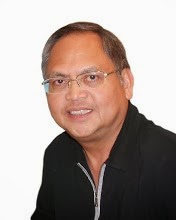
Tuesday, December 21, 2021

We are in deep doo-doo.

We can go on denial mode, but that can only mean we shall keep missing the turn at every fork.

In other words, a vicious circle does not happen by accident. It is the convergence of several miscarries. 

We’ve been kicking up a perfect storm.

That’s why the postings would often reference the genesis of the blog.

We were supposed to be the most sophisticated nation in the region. And I owe it to that impression – by the outside world, especially the Americans – that we would be the next big thing. My old MNC-company chose me to be the regional manager over colleagues, including Australians and Canadians.

But what happened?

Let’s hold it right there.

I will again risk being immodest to illustrate the imperative of benchmarking against best practice models – i.e., for us to look outward, forward, and across disciplines and specialties consistent with the 4 C’s to 21st-century skills.

How did we become the regional laggard when we were supposed to be the next big thing?

We can only point to our instincts: We are parochial and insular. We value hierarchy and paternalism and rely on political patronage and oligarchy that ours is a culture of impunity.

That is one heck of a barrier: We ceded the region to our neighbors and then to the world and became the supplier of low-skilled labor. The biggest insult I hear from my introduction, especially in Europe, is that I am a New Yorker, not a Filipino.

On the other hand, we celebrated the OFW phenomenon.

And recall that several years ago, at the Ateneo and UP economic briefings, I questioned the manufacturing uptick our economists and “economic managers” were celebrating. We are a consumption-service economy. That is our reality, irrespective of what the manufacturing numbers were saying. It’s called context. And no financial mumbo jumbo would suffice.

And our instincts, again, get in the way. “Context” deserts us because of our crab mentality. In other words, we can’t distinguish between the “vital few” and the “trivial many.” It comes from Pareto, whose principle influenced economics.

Then consider: If we can’t even admit to ourselves that we blew it, where would we get the courage to change, to reinvent Juan de la Cruz?

My first real introduction to the American culture came from my first boss in New York: “I blew it.” And my response: I’ll fix it.

In other words, we don’t fix our piles of problems because we can’t admit to our faults. That reminds me of Padre Damaso and why it is a regular postings feature. 

That inability to own up to our mistakes is an ingredient to a perfect storm.

But let’s get back to the genesis of the blog: How come no one raised the red flag that Vietnam’s FDI was almost twice as ours back in 2009?

Bring that to today: How come no one raised the red flag that our investment policy-making and tax reform initiatives don’t measure up to 21st-century demands?

Recall the Eastern European Ph.D. I mentored and questioned the outline of the dissertation approved by the professor-adviser. 

I had read through a handful of dissertations and understood the outline she would use. “I will only assist you if you commit to using the final product to a real-world challenge.” The scores of dissertations I scanned were too academic; they won’t fly in the real world.

It did not surprise me. As those familiar with the blog may recall, the US has its shortcomings in higher education that “Fortunate 500 companies” had to grab the bull by the horns — and created in-house education and training initiatives.

Academics have their world. That’s why we call academe “Ivory tower.” 

That is how we have crafted our investment policies and tax reform initiatives.

In other words, such pursuits must pass the acid tests; and in this particular case, the blog asked: “Devolving to LGUs is not the answer in a banana republic. If LGUs are not the answer, is it CREATE and SIPP or the scores of industry road maps? What about this news? “Congress ratifies bicameral report on amendments to Foreign Investments Act.”

“Translation: Our investment policy-making and tax reform initiatives don’t measure up to the demands of the 21st century. 

“The evidence? Will any of our efforts match the coup Vietnam pulled with Samsung Vietnam?”

Let’s have another example familiar to those that read the blog.

But before that, let’s recall the “4 C’s to 21st Century Skills.”

Take two of them: "Critical thinking • Students need to be able to look at problems in new ways and link learning across subject areas. 

“Creativity • Students need to be willing to try new approaches to get things done. That leads to innovation and invention.” 

And the other example: We had over 1,000-strong scientists at my old MNC-company, and I empowered the CEO of the pharma unit to buy an outside technology to put us ahead of the state-of-the-art. And it catapulted our biggest brand ahead of the competition in the US market and dominated the global market.

In other words, if inhouse R&D isn’t the be-all and end-all, economics isn’t the be-all and end-all in nation-building. Look at how Vietnam pulled that coup with Samsung Vietnam. They don’t teach that in economics school?

Look at the Ph.D. referenced above. Today, she is the global marketing director of one of the world’s most famous brands. 

If we care for another example: Why did we not develop the instincts of innovation? And why is “franchising” prominent in the Philippines instead?

We rely on political patronage and oligarchy to drive business and industry.

And it is not surprising. When we value hierarchy and paternalism, we don’t value humankind. Instead, we love tyranny. Why did freedom-loving nations award the Nobel Peace Prize to Maria Ressa and deny Harry Roque the ILC seat?

Why did we buy into the mantra of “serving the bottom of the pyramid”? That is how victimhood and entitlement come about. In other words, we see paternalism as a virtue when we are invoking rank and privilege as in our caste system – aka destiny. To respect humankind, we must be committed to raising one’s well-being. Even informal settlers deserve to have a TV set, for example. 

Even beyond that, recall “personal responsibility” is inherent in a democracy: It is an exercise in self-government to attain the “common good.” It is not the place for Bondying or Juan Tamad. In other words, who wants to be an object of charity? Charity-giving is the exception, not the rule in a functioning society.

Recall that my Eastern European friends were surprised that while they were excited about “branding” and “innovation” being new to the free market – born and raised as socialists under Soviet rule – I started the first marketing workshop with Maslow’s hierarchy of human needs. They thought technology and design were lesson number one.

Still, the first brand we focused on became their springboard to become a model enterprise among big and small companies across the EU. 

And how time flies. These friends had asked: Do you think we can even compete against the best brands from the West?

“You must be continually addressing the hierarchy of human needs – not bogged down at the bottom of the pyramid – and that means moving up the value chain.” 

Long story short, they “killed” the Western brand in their home market. And the Western competition saw the handwriting on the wall – as my friends expanded their reach in the region – and sold the European business. I did not acquiesce when the competition offered the brand to them.

I chuckled when I then saw the brand in the Philippines. It must be because the local marketer knew that we Pinoys “serve the bottom of the pyramid.” But this brand died because, in Europe, even poor consumers from Eastern Europe seek better and better products – demonstrating their hierarchy of needs.

Let’s pause right there.

Which Filipino company — big or small, as an MSME — even contemplates overpowering an MNC in the region? 

Why not – because we pigeonholed Juan de la Cruz as a fragile enterprise and can only survive if we value hierarchy and paternalism?

And that reinforces our fixed mindset; worse, it undermines any desire to develop a growth mindset.

Unsurprisingly, we can’t see a rut a mile away because our caste system denied us the instinct to be ahead of the curve. Instead, we developed the knee-jerk as in “Pinoy abilidad.”

Consider: Our economics playbook focuses on monetary and fiscal policies — something we learned from the West. That plus our insularity can explain why we ignored the omens that came with the economic miracles labeled Asian Tigers. See above; our fixed mindset undermines any desire to develop a growth mindset.

In other words, we took the successes of our neighbors for granted; they were not the laissez-faire models. For example, Lee Kuan Yew had run Singapore like a company. 

And so, we took it as a given that the private sector would drive economic growth – as in the “animal spirits” they had in the West. 

Moreover, financial types would see the financials as the be-all and end-all.

Let’s hold it right there.

Recall that the blog has repeatedly spoken to “logical yet linear and incremental thinking.” And conversely, to “forward and lateral thinking.” The latter is counterintuitive and not in our comfort zone — and why it is associated with exceptional minds like Einstein and Jobs and a few others.

The good news is that it is knowable. Thanks to Edward de Bono, who introduced creative and lateral thinking to humankind.

The first time I was a team member (while still in the Philippines) assigned to a restructuring initiative at my old MNC-company, our marching orders were: “Cut overhead by 10%.” How else to describe that but logical yet linear and incremental?

And I felt it was a very narrow perspective – and could miss out on more positive factors to drive the way forward. [That is why later on, I would change the planning and budgeting system of this 200-year-old Fortune 500. And that was after the president recognized how I had upgraded the way we conducted business in the region. Did I embarrass the financial community? We hired from the Ivies and top US audit firms.] I can go on with lots more examples of how number crunching can fall way short of addressing a challenge.

But then again, recall the 4 C’s to 21st-century skills.

See above; Edward de Bono. Readers of the blog may recall that the late Anacleto del Rosario, acknowledged as the first Philippine marketing consultant, introduced me to de Bono when he arranged for the latter to conduct a workshop for the marketing and advertising community. And I was up close and personal, but whatever he said went over my head. I was too young and naïve. 

But there must have been a germ of knowledge that settled in my subconscious mind that as I gained career experience, it nudged my brain. 

For example, when we addressed the shortcomings of US higher education for my old MNC-company and developed an in-house education and training curriculum, we met with top educators and consultants. That was when I learned about “cognitive development.”

The resources we tapped recognized that marrying on-the-job experience to the various disciplines would bring about what they called “teachable moments” and have a knock-on effect on “cognitive development.” Teachable moments are when the abstract comes out with clarity to relate to the real world.

Recall that the blog often discusses the continuum of binary and relative thinking, that cognitive development or moving across the continuum is a function of experience. 

And I go back to my second job (I had six in a 20-year career in the Philippines), with barely ten months experience in another company. 

And in my short stint of fourteen months, I led the development of the planning and budgeting model, including the capital expenditure budget. I also dug deep into the sales function and how we had to drive revenues – and develop a compensation package for the VP of Sales, among others.

The assignments came fast and furious. The General Manager, a young Wharton graduate, the conglomerate patriarch’s son, recognized that I was responsive and proactive, to boot. He would come to me to dump whatever he couldn’t assign to anyone.

But I left not long after; the choice was between this family enterprise and an MNC. I chose the latter but again left after thirteen months. It was an awful company; the number two (a Spanish-Filipino) turned it into a tyrannical place.

I should have welcomed it because it opened promotion opportunities for me. The “number two” asked to see me: “I just fired your boss, move into his office. I admire what you have accomplished in so short a time. Your first assignment is to fire the purchasing manager.” I was in my early 20s; it awed people in the company — they called me the “hatchet man.” I wonder why the American bosses let him. MNC is not a magic word. 

While attending MBA school, I learned by doing and realized the nuances between the real world and academe.

At a very young age, I could be staying in the office up to 10 to figure things out, surviving on 12 cups of coffee and a pack of cigarettes. I paid the price, prescribed thyroid pills for the rest of my life.

The bottom line: Early in my career, I learned that financials could not be the be-all and end-all. And why the blog keeps saying that nation-building is beyond monetary and fiscal policies, for example.

The good news is that the 4 C’s to 21st-century skills are not foreign to us. The challenge is: how do we internalize and operationalize them in our nation-building efforts?

We are in deep doo-doo.

We can go on denial mode, but that can only mean we shall keep missing the turn at every fork.

In other words, a vicious circle does not happen by accident. It is the convergence of several miscarries.

We’ve been kicking up a perfect storm.

Gising bayan!

Thursday, December 16, 2021

We are back to square one.

“WB report: Covid scarring cuts PHL growth,” Cai Ordinario, BusinessMirror, 7th Dec 2021. 

“THE extent of the economic scarring caused by the pandemic has cut the country’s long-term economic growth potential to only 5.7 percent on average between 2020 and 2029, according to the World Bank.

“The jobs lost to the pandemic will lead to a higher poverty rate. The World Bank estimated this would mean a poverty rate of 22 percent in 2020 and 21.3 percent in 2021, based on the lower-middle-income poverty line of $3.20 a day in 2011 purchasing power parity (PPP).

“The World Bank said the social assistance under Bayanihan to Heal as One Act (Bayanihan 1) was not enough to prevent more people from falling into poverty.

“This foreshadows that the crisis will have long-lasting effects on Filipinos’ well-being.”

And as Elfren Cruz says, how can we internalize what staying in a one-star hotel means when billeted in luxury accommodation.

“The greatest challenge for those who believe in democracy is to show the ordinary people that democracy can resolve the terrible wealth inequality that exists in society. Unfortunately, most economists and the business sector are still obsessed with economic growth and GDP increase. I advise them to read Pope Francis, who has repeatedly said that the concept of ‘trickle-down’ has not worked, does not work and will never work.” [“Summit of democracies,” Elfren S. Cruz, BREAKTHROUGH, The Philippine Star, 9th Dec 2021]

Let’s dissect the assertion of Elfren. It is not to embarrass Elfren but to address the countless of us that share the sentiment.

But before we do, recall that Elfren has written about “The 4 C’s to 21st Century Skills.” They can be easily googled: “Students need these specific skills to participate in today’s global community fully: Communication, Collaboration, Critical Thinking, and Creativity.

“Communication • Students need to be able to share their thoughts, questions, ideas, and solutions.

“Collaboration • Students need to be able to work together to reach a goal while putting their talent, expertise, and knowledge in action.

“Critical Thinking • Students need to be able to look at problems in new ways and link learning across subject areas.

“Creativity • Students need to be willing to try new approaches to get things done. That leads to innovation and invention.

“To encourage the development of these skills, we must intentionally focus on the design of program activities.

“We need to allow students to take ownership for their learning. They should move toward becoming developers of knowledge rather than consumers of knowledge.

“Our out-of-school time environment should enable students to move beyond typical methods of study, such as writing an essay after reading about a topic, to tackling a relevant problem, such as bullying.

“We must encourage students to create a project that allows them to share their findings and impact change.”

Question: Where is PH in wealth inequality?

Answer: We have the worst GINI coefficient index in the region.

And so, it stands to reason that we are outraged. And here’s the perspective of Elfren: “Unfortunately, most economists and the business sector are still obsessed with economic growth and GDP increase. I advise them to read Pope Francis, who has repeatedly said that the concept of ‘trickle-down’ has not worked, does not work and will never work.”

Question: Should we not be obsessed with economic growth and GDP increase?

Before we answer that, we must first ask whether Pope Francis was speaking to the Philippines?

“Without naming countries or people, Francis condemned politicians who seek popularity by appealing to the basest and most selfish inclinations.

“The 2007-2008 financial crisis was a missed opportunity for change, instead of producing increased freedom for the truly powerful, who always find a way to escape unscathed. Society must confront the destructive effects of the empire of money.”

“Francis repeated past calls for redistribution of wealth to help the poorest and for fairer access to natural resources by all.” [“Pope says the free market, ‘trickle-down’ policies fail society,” Philip Pullella, Reuters, 4th Oct 2020]

Of course, the pope is talking to all believers. But are we solving the problem of Juan de la Cruz by making such a broad generalization?

With due respect to Elfren – and us in the Philippine elite and chattering classes – we are prone to offer solutions as though we’re demigods when they are a veiled assertion of hierarchy in our caste system?

The evidence? Recall that we (a) crafted a constitution that restricts foreign investment and (b) ignored Juan de la Cruz, who wanted the Subic Bay Naval Base to remain.

But it is unsurprising because Juan de la Cruz values hierarchy and paternalism.

And so we proudly celebrated the OFW phenomenon – despite the social costs – and the 4Ps and the continuing devolution – of our meager tax-revenue income – to LGUs.

In other words, we created a banana republic by not pursuing industrialization and restricting foreign investment and technology.

But we aren’t done yet. Look at the alliance of Marcos, Arroyo, Estrada, and Duterte. 

They will ensure that our instincts become vibrant: Parochial and insular. We value hierarchy and paternalism and rely on political patronage and oligarchy that ours is a culture of corruption.

Let’s pause right there.

Like a broken record, the blog plays our instincts time and again. Because if we can’t come to grips with who we are, we are no different from an alcoholic — i.e., our instincts are an addiction in Franciscan theology-speak — who failed the AA 12-steps. And they mirror the St. Ignatius discernment exercise or “examen” — God helps those who help themselves. 

In other words, to be the laughingstock of the region is not our reason for being.

But we will continue to pay a heavy price for our instincts: endemic corruption, especially in the public sector, an education crisis, unlivable urban metros, inadequate healthcare, worsening informal settlers, among countless others.

Why? Back to what Elfren is complaining about: our pathetic GDP per capita.

What should we do?

Consider why trickle-down economics doesn’t work for us: The $60 billion we generate from remittances and the call centers give us a consumption-service economy. And the multiplier effect – as in the spawning of subindustries in raw material sourcing and parts and components, among others – is much less than the $57 billion Samsung Vietnam exports or an investment-industrial economy.

And that alone will explain why Vietnam has arrested poverty. And the story doesn’t end there. Their exports are 444% more than ours.

And Vietnam is a newcomer to the game. And that is why when we travel to Bangkok or KL or Singapore, we can see with our own eyes why we’re the regional laggard.

In other words, what wealth are we going to redistribute with a GDP per person of $8,000? Compare that to Thailand = $17,300; Malaysia = $26,400; Singapore = $93,400.

And for reference, the US is at $62,530.

And so, Pope Francis was talking to the Americans more than the Filipinos.

Still, we Pinoys can do something about it.

Consider these elements that make for a banana republic: “(1) A politically unstable country. (2) Extremely stratified social classes: usually a large impoverished working class and a ruling class plutocracy, composed of the business, political, and military elites of that society. (3) Collusion between the state and favored economic monopolies. (4) An imbalanced economy remains limited by the uneven economic development of town and country.” [Wikipedia]

In other words, devolving to LGUs is not the answer in a banana republic. And that is why the blog keeps raising our instincts: We are parochial and insular. We value hierarchy and paternalism and rely on political patronage and oligarchy that ours is a culture of impunity.

If LGUs are not the answer, is it CREATE and SIPP or the scores of industry road maps?

What about this news? “Congress ratifies bicameral report on amendments to Foreign Investments Act.”

“McKinsey and Co. Philippines Acting Managing Partner Jonathan Canto said the Philippines should explore a potential niche as a manufacturing hub with 80% of US companies and 67% of European companies from China to elsewhere in Asia. And Vietnam, Thailand, and Malaysia are currently gearing up to take over China.

“Mr. Canto recommended that the Philippines reassess its FDI strategy and priority sectors, build unique deal-focused value propositions, focus on investment promotion, and ensure end-to-end support for investors.” [“Foreign chambers tout FDI as key to economic recovery, poverty relief,” Bianca Angelica D. Añago, BusinessWorld, 1st Dec 2021]

Translation: Our investment policy-making and tax reform initiatives don’t measure up to the demands of the 21st century.

The evidence? Will any of our efforts match the coup Vietnam pulled with Samsung Vietnam?

Consider: It takes over 10 million OFWs and over one million call center workers to generate for the Philippines $60 billion against the $57 billion Samsung Vietnam exports.

Then consider: The total wealth of our dollar billionaires in 2020 was $35.10 billion. Say we redistribute 20% to Juan de la Cruz that will be $7.02 billion.

Put another way, if we add the $60 billion from remittances and call centers to $7.02 billion, the driver of our consumption economy will go up to $67.02 billion.

But then, recall our exports are low at $48.2 billion against Vietnam’s $214.1 billion.

That is why the blog raised the following: “Instead of a 6%-7% GDP growth metric, should we set $200 billion incremental GDP as the hurdle? That will make more concrete the exercise to prioritize industries.

“For instance, why did Vietnam attract Samsung smartphones and we did not? That is a critical benchmark because that initiative delivers more revenues for Vietnam than our eight top companies combined for PH.

“We must dig up the details of the Samsung and Vietnam partnership.”

In other words, how do we operationalize the “4 C’s to 21st Century Skills”?

Take two of them: “Critical Thinking • Students need to be able to look at problems in new ways and link learning across subject areas.

“Creativity • Students need to be willing to try new approaches to get things done. That leads to innovation and invention.”

Let’s reprise them with feelings: (a) to look at problems in new ways and link learning across subject areas; (b) to be willing to try new approaches to get things done – that leads to innovation and invention.

Recall that the blog never tires of raising the character of the creation story and this universe, i.e., dynamism and interdependence – because Juan de la Cruz spells status quo.

We are back to square one.

And so we must ask the question again: “How do we find our place in the sun?

“But before we do a knee-jerk, let’s remember that our brains could be in “reflex” mode and why our go-to solution reflects “Pinoy abilidad.” How do we switch to “reflection” mode?

“But we must first ask the question: Does finding our place in the sun mean surviving or thriving? We must ask the question because Pinoy abilidad yields “pwede na ‘yan.” And why we succumbed to the “OFW disease,” once known as the Dutch disease.”

“THE extent of the economic scarring caused by the pandemic has cut the country’s long-term economic growth potential to only 5.7 percent on average between 2020 and 2029, according to the World Bank.”

In other words, if from 2009-2019 we grew GDP at a compounded 8% (at constant $) and still suffered a poverty rate of 16.7%, “the jobs lost to the pandemic will lead to a higher poverty rate. The World Bank estimated this would mean a poverty rate of 22 percent in 2020 and 21.3 percent in 2021.”

We are back to square one, and why we quote from a recent posting:

“We have “think tanks” and world-class economists and economic managers. Why can’t they be the core of the effort to turn this nation around? They can pull other sectors too – especially the likes of the late Fr. George Gorospe, SJ, because the enterprise must be grounded in “reality” – that it is beyond any human experience or system. But they must start as a small group to figure out a game plan quickly.

“Freedom and the free market are self-government undertakings to attain the “common good.” It does not have to be a top-down process. For over a dozen years, the blog shared examples even at the risk of being immodest because we have to start somewhere.

“For example, the effort to turn this nation around could support AmBisyon and Arangkada, raise them to the next level, and facilitate execution.

“It can respond to the question, what “forces” are restraining AmBisyon and Arangkada? Conversely, what “forces” can move them forward? How do we either overcome or exploit them accordingly?

“Even more fundamental is to unfreeze our brains and free them of knowledge that we have not challenged all along despite our predicament.

“We are the regional laggard and must reinvent Juan de la Cruz.”

Gising bayan!

Friday, December 10, 2021

How do we find our place in the sun?

But before we do a knee-jerk, let’s remember that our brains could be in “reflex” mode and why our go-to solution reflects “Pinoy abilidad.” How do we switch to “reflection” mode?

But we must first ask the question: Does finding our place in the sun mean surviving or thriving? We must ask the question because Pinoy abilidad yields “pwede na ‘yan.” And why we succumbed to the “OFW disease,” once known as the Dutch disease.

There are two sides to a coin. Even the disciplines we represent are beyond “science,” they are married to “arts.” I still chuckle every time we proudly applaud the appointments of “technocrats” to vital government positions because it reveals binary thinking.

Consider: The pandemic has scarred the economy, yet we still have to look beyond our noses. A great strategist is a great tactician to boot.

See above; we can’t be in “reflex” mode.

But because of our caste system, we take our one-dimensional world as gospel truth. Unsurprisingly, we value hierarchy and, in return, expect paternalism.

And that explains why we can’t problem-solve. 

In other words, we can’t forward-think because the caste system made our world “finite” – even when this universe isn’t.

To find our place in the sun is to thrive in this universe. 

That explains why Bongbong leads the polls. Their camp represents the hierarchy and must have the final say, as in Padre Damaso.

Where is Philippine investigative journalism? Why isn’t Marcos’s unexplained wealth common knowledge?

As my Romanian friends would remind me, think of Ceaușescu.

But then again, isn’t media controlled by the oligarchy? Of course, they have the same thing in the West. And that is why I have no respect for US politics. Those blessed with more must give more.

I would shake my head years ago every time I boarded a plane to London because they would offer trash – aka tabloids. But then, it came to the US too. Between Facebook and Fox, you can’t get much more misinformation – aka tabloid journalism.

The polarization of American politics is explained, for example, by this news item: Pro-Trump counties now have far higher Covid death rates.

But the Americans are big boys and girls. Let them sort their problems.

How do we Filipinos find our place in the sun?

The blog has offered two “concepts” to help us figure the way forward.

First are our instincts: We are parochial and insular. We value hierarchy and paternalism and rely on political patronage and oligarchy that ours is a culture of impunity.

The other is the outcome we must seek: To traverse poverty to prosperity rapidly.

It is not enough to have a vision because if it represents “point B,” there is a need for “point A”?

In other words, we are talking about the GPS model: Where are we; Where do we want to be; How do we get there.

Point A is critical because we most likely won’t agree on point B if we can’t establish where we are. For example, some of us have said, “we are a rich nation pretending to be poor.”

If we are, is point B, we must stop pretending?

The blog pointed out that Thailand is twice wealthier and Malaysia is three times.

And we don’t need to be an economist to see these with our own eyes. When we travel to Bangkok, don’t we readily see that they are twice more prosperous? And KL is three times? Moreover, Singapore is more than ten times?

That frame will make for a more concrete point A – as in, we are the regional laggard. In other words, let’s not pretend that we are a wealthy nation because we are not.

But then again, we can’t keep to a “finite” world and why we are deep in the abyss. And that is why a vision cannot be finite too. And the best model the world has known is the American “pursuit of life, liberty, and happiness.”

That is not finite. Americans even call it an experiment being merely aspirational.

And that will help us recognize that this world we live in is not finite. That’s why the blog keeps raising the character of the creation story and this universe, i.e., dynamism and interdependence.

If we push the envelope, we will recognize how Christianity and Democracy weave into the fabric of this universe. For example, the Vatican evolved: from a “finite” world characterized by the crusades and inquisitions to the pursuit of ecumenism.

And the West – which represents freedom-loving nations – has evolved from colonialism to a global community.

That brings us back to “Pinoy abilidad.” Keeping to our “reflex” mode will explain why we are out of sync with this world.

We need much reflection instead of falling into the trap of “pwede na ‘yan.”

The reality is “pwede na ‘yan,” coming from us in the Philippine elite and chattering classes, is a veiled assertion of rank – which has its privileges; we have the final say.

Do we wonder why the blog has asserted that if we can’t forward-think, we can’t problem-solve?

Let’s get back to our instincts. How do we undo them? See above; where is Philippine investigative journalism that the Marcos unexplained wealth is not common knowledge?

For example, as CJ Panganiban explained, the prosecutors committed an elementary error in “evidence.” They did not present original documents. Why?

If we can’t put such a glaring display of impunity to bed, how can Juan de la Cruz learn and own the efforts to change as a people and nation?

And add to that the alliance of Marcos, Arroyo, Estrada, and Duterte.

We are a banana republic.

We need more than a vision.

But we don’t have to reinvent the wheel. As the blog never tires saying, we ignored the world’s economic miracles in the Asian Tigers, China, and now with Vietnam too?

Our sense of rank and hierarchy has proven us wrong many times over. Let’s get over it.

We better get a handle on the alliance of Marcos, Arroyo, Estrada, and Duterte.

But not only. We better do the same thing with the oligarchy. And the endemic corruption in the public sector. And our pitiful education system.

We have “think tanks” and world-class economists and economic managers. Why can’t they be the core of the effort to turn this nation around? They can pull other sectors too – especially the likes of the late Fr. George Gorospe, SJ, because the enterprise must be grounded in “reality” – that it is beyond any human experience or system. But they must start as a small group to figure out a game plan quickly.

Freedom and the free market are self-government undertakings to attain the “common good.” It does not have to be a top-down process. For over a dozen years, the blog shared examples even at the risk of being immodest because we have to start somewhere.

For example, the effort to turn this nation around could support AmBisyon and Arangkada, raise them to the next level, and facilitate execution.

It can respond to the question, what “forces” are restraining AmBisyon and Arangkada? Conversely, what “forces” can move them forward? How do we either overcome or exploit them accordingly?

For instance, we must step up to the plate and eliminate the barriers to attracting the critical foreign investment and technology we must embrace.

It can also fine-tune the definition of the outcome we seek. Is traversing poverty to prosperity rapidly acceptable?

And what intermediate "outputs" must we deliver to bring us closer to the above "outcome"? For example, instead of a 6%-7% GDP growth metric, should we set $200 billion incremental GDP as the hurdle? That will make more concrete the exercise to prioritize industries.

For instance, why did Vietnam attract Samsung smartphones and we did not? That is a critical benchmark because that initiative delivers more revenues for Vietnam than our eight top companies combined for PH.

We must dig up the details of the Samsung and Vietnam partnership.

We must learn to create an actionable framework to do the exercises successfully. For example, we must distinguish between drivers and enablers.

If we struggle to make the above distinctions, the McKinsey representative at the recent Arangkada forum can be an ideal resource.

“McKinsey and Co. Philippines Acting Managing Partner Jonathan Canto said the Philippines should explore a potential niche as a manufacturing hub with 80% of US companies and 67% of European companies from China to elsewhere in Asia. And Vietnam, Thailand, and Malaysia are currently gearing up to take over China.

“Mr. Canto recommended that the Philippines reassess its FDI strategy and priority sectors, build unique deal-focused value propositions, focus on investment promotion, and ensure end-to-end support for investors.” [“Foreign chambers tout FDI as key to economic recovery, poverty relief,” Bianca Angelica D. Añago, BusinessWorld, 1st Dec 2021]

Even more fundamental is to unfreeze our brains and free them of knowledge that we have not challenged all along despite our predicament.

We are the regional laggard and must reinvent Juan de la Cruz.

How do we find our place in the sun?

Gising bayan!

Monday, December 6, 2021

If we can’t forward-think, we can’t problem-solve

Here’s a breath of fresh air: “1987 Charter framer joins call for change,” Tyrone Jasper C. Piad and Cai Ordinario, BusinessMirror, 1st Dec 2021.

“THE ‘Filipino First’ mentality that guided the crafting of the 1987 Constitution will not propel the Philippines to a higher economic growth path that is needed to eradicate poverty, according to a framer of the country’s charter.

“In the first plenary of the virtual Arangkada Philippines Forum on Wednesday, constitutionalist and economist Bernardo M. Villegas said removing restrictions to foreign investments would allow the country to recover from the pandemic and help eradicate poverty.”

Whew! I wanted to say that the first plenary at the Arangkada Forum made my day. And it should.

But, as a “change management” practitioner, I’m very much aware of the two operating systems of the brain: (1) automatic or “reflex” mode and (2) conscious or “reflection” mode.

Change is not a walk in the park. But I will root for the effort. Thanks to the JFC!

Consider: This blog will soon be 13 years young and has spoken to the “Philippine Economy: Reinventing Ourselves” nonstop – through two administrations, Aquino and Duterte.

And it appears we are now on the cusp of change.

But then, recall what the blog says about our instincts: We are parochial and insular. We value hierarchy and paternalism and rely on political patronage and oligarchy that ours is a culture of impunity.

Unsurprisingly, Juan de la Cruz spells status quo.

And that brings us – those familiar with the blog – to Kurt Levin’s force-field theory, which we can easily Google: “The force-field theory of change proposes that two sets of opposing forces determine how the process of change will take place.

“It is a common observation that a group would endorse the change while another would oppose it. The force-field theory states that the dynamics between these opposing forces determine the overall success of the change process.

“The two opposing forces are (1) Resistance to the change and (2) Forces that accept change. The former are those that want to maintain the status quo and challenge any attempt for change; the latter are those that believe in constant learning – they understand the dynamic societal context and know that change is often necessary for survival.”

And that’s why the blog addresses us in the Philippine elite and chattering classes: It was us, not Juan de la Cruz, that crafted the Constitution; thankfully, a framer joins call for change.

How do we then edify Juan de la Cruz? It takes a village to undo our instincts.

Recall that when I first arrived in Eastern Europe, they wanted me to “spoon-feed” them of the “how-to” of freedom and the free market. But “change” isn’t imposed because it demands “learning” and “ownership.” They must “own the change effort” – although born and raised socialists under Soviet rule.

It is similar to Juan de la Cruz. We were born and raised insular and parochial – and value hierarchy and paternalism and rely on political patronage and oligarchy that ours is a culture of impunity.

And after decades since independence, we can’t claim that we have internalized what democracy and the free market entail. For example, while leadership is inherent in a democracy, it is a self-government undertaking, “the common good.”

The instincts of crab mentality and the submission to tyranny because of the value of hierarchy and paternalism are anathema to freedom and the free market. And the easy way out is not the embrace of another ism that is merely a human construct.

If Arangkada finally takes off, we in the Philippine elite and chattering classes must show the way, but Juan de la Cruz must own it.

On the other hand, we in the Philippine elite and chattering classes must acknowledge that beyond crafting a constitution that restricts foreign investment, we too kicked out the US military, for example. Juan de la Cruz wanted to keep the Subic Bay Naval Base. And it was unsurprising; rank has its privileges – instinctively, we tried to pull rank.

In other words, even free people are subsets of more significant sets given the character of the creation story and this universe, i.e., dynamism and interdependence.

Sadly, we kept piling challenges after challenges on the shoulders of Juan de la Cruz.

It has not stopped. We are playing into the hands of the dynasts cum tyrants that want to rule this country post the presidential election. Every time my Romanian friends hear about our acquiescence of EJKs, for example, they would remind me of Ceaușescu. Worse, freedom-loving nations saw the Philippines as a pariah.

Should we pause and ponder?

We love tyranny, and that’s why we submit to it, per Rizal.

That inability to forward-think explains why we took another wrong turn at the fork: a deceleration of GDP growth is imminent post-pandemic because of the Mandanas law.

News item: Implementation of the Mandanas ruling seen to dampen economic growth.

How often did the blog raise the Pareto principle? But our crab mentality is so consuming that we have been running around like a headless chicken.

Let’s start with our GDP per person (in USD) against our neighbors: Philippines = 8,000; Thailand = 17,300; Malaysia = 26,400. Even Vietnam is now ahead of us at 8,200.

News item: 45% of Filipino families feel poor — Sept. 2021 SWS survey.

Why are we poor, and why do we have to borrow even more because of the pandemic? Indeed, even before the pandemic, we borrowed tons of money for the 4Ps – to keep Juan de la Cruz’s body and soul together.

Of course, it is not for us in the Philippine elite and chattering classes. And so we challenge the wisdom and the prudence?

News items: (a) World Bank approves $600-million loan for PHL 4Ps program; (b) World Bank and ADB approve $900M in loans for PH vaccine procurement, pandemic response.

Let’s try the education metric and raise our education investment to 6%. How much will that mean per person – and simplify the comparison based on GDP per capita?

Philippines = 480; Thailand = 1,038; Malaysia = 1,584; Vietnam = 492.

Shouldn’t we spend more on education than 6%, given how meager $480 is – if we want to address the education crisis? But where will we get the money? Will we borrow more?

Let’s push the exercise and compare “tax-revenue income” against GDP per person because that is where we get the money to pay for education and healthcare, and housing, among others.

And to simplify the analogy, let’s say the countries are equally efficient in generating tax-revenue income of 20%: Philippines = 1,600; Thailand = 3,460; Malaysia = 5,280.

What is so mysterious about that? Aren’t our heads merely dug deep in the sand?

We cannot squeeze blood out of a stone. But insanity is not in our vocabulary, so we keep championing more LGU initiatives and farm out the meager PH tax-revenue income to local governments – the “common good” be damned.

If we pause and switch from “reflex” to “reflection” mode, we will figure out that we can’t afford much to sustain Juan de la Cruz no matter how we slice and dice our tax-revenue income – because our national income or GDP is at such a pathetic level? In other words, being over a hundred million strong is a double-edged sword. We have more mouths to feed.

If we can’t forward-think, we can’t problem-solve.

Why are we poor, and why do we have to borrow even more because of the pandemic?

Recall that the blog often raises that the Philippines has a structural problem, celebrating a consumption-service economy and suffering from the “Dutch disease.” In fairness to the Dutch, we can now own – and call – it “OFW disease.”

And we in the Philippine elite and chattering classes exhibit the symptoms of the disease as much if not more than Juan de la Cruz.

Why? How? We generate $60 billion on the backs of over 10 million OFWs and 1.3 million in call centers. The social costs of these remittances are staggering even as we enjoy their fruits – we created a handful of dollar billionaires, for example.

See no evil. Hear no evil. Speak no evil.

In other words, our economic managers, as a retired bank president shared with me, cannot brag about our ability to manage inflation and the exchange rate given this manna – the $60 billion – from heaven. It is no different from coming to work every day, and it is their day job, nothing out of the ordinary.

And in the process, we failed to edify Juan de la Cruz on the imperative of moving to an investment-industrial economy – that generates tangible things that raise one’s well-being. That is where the multiplier effect of investment comes from and why Vietnam left us in the dust.

And we cannot be partial to the Philippine oligarchy. These oligarchs have embarrassed themselves; collectively, they failed to match the revenues generated by one Vietnam enterprise, Samsung Vietnam.

And here’s the rub: Getting a freebie – as staggering as $60 billion may seem to us Pinoys – does not generate the multiplier effect as that of an investment-industrial economy.

And creating tangible things or products is where the human side of an enterprise begins. Producing products that will raise one’s well-being respects humankind’s hierarchy of needs.

But it is not a cakewalk. And in the 21st century, it is called innovation. Because humankind must thrive in this dynamic world, not merely survive, that is why it is called innovation – and it is extraordinary.

And it demands forward-thinking. For example, successfully implementing an industrialized economy requires managing several dynamics.

And depending on the industry, these are the dynamics of (a) the marketing mix, (b) resource mix, and (c) execution mix. They represent a “wall-to-wall” process and mimic the photosynthesis phenomenon.

In other words, we cannot afford to be shortsighted; else, we become a dysfunctional economy and nation.

And that brings agribusiness and MSMEs to mind. The principle does not change, and these endeavors must seek a quantum leap and not merely raise revenues incrementally — as in livelihood undertakings. They have no fighting chance in the 21st century, where innovation and global competitiveness are the norms.

The outcome we seek is to traverse poverty to prosperity rapidly. And increasing government support and budget allocations can only fall short. See above; our GDP is at such a pathetic level.

Agri and MSMEs must not fall into the “trivial many” trap as we did in developing scores of industry road maps. We must define the “vital few” as in Pareto and craft a world-class game plan.

What industries and products will bring a quantum leap in revenues? Recall that my first challenge to my Easter European friends was to seek to become a $100-million enterprise because that is the median size of a Fortune 500 subsidiary that was their competition.

And Pacquiao knows that to win, he can’t fight above his weight class. And here is where the Theory of Change comes in. We must trace or map backward to define the outputs of the three dynamics of (a) the marketing mix, (b) resource mix, and (c) execution mix. See above; a “wall-to-wall” process that mimics the photosynthesis phenomenon.

Let’s briefly address the marketing mix: At its heart are the norms of the 21st century, innovation, and global competitiveness. The good news is that when figuring out which industry and product to prioritize, those that command the most significant human needs generate the most revenues. That makes for a sizable bullseye to target.

And whoever dominates that market must be the benchmark. Why is the market leader successful? Is there room in the industry for another player? Most likely, because the business is attractive, there will be lots of wannabes. But what differentiates the market leader from the crowd? And it won’t be surprising that there is a vast chasm between them. That will make for a sharper definition of the outcome the enterprise must seek. That means designing the undertaking to replicate the market leader and leave the wannabes in the dust.

That is why it is critical to learn how to trace or map backward and define the range of outputs for the marketing mix, the resource mix, and the execution mix.

For example, what R&D efforts to establish, where to tap them, what manufacturing facilities to erect, and the utilities to support them like electricity and water? What about the logistics requirements? What are they? And continuingly, how and where to market and sell the products?

But that is why the market leader must be the benchmark – to replicate its winning ways.

Sadly, we will continue to struggle because of our inexperience in nation-building – and development. We are stuck at the binary level and are yet to move closer to “relative thinking.” That is why we must seek to benchmark against our neighbors.

Benchmarking is how we can overcome our inexperience – as Deng demonstrated, i.e., he heeded the advice of Lee and Mahathir: Beg for Western money and technology.

“McKinsey and Co. Philippines Acting Managing Partner Jonathan Canto said the Philippines should explore a potential niche as a manufacturing hub with 80% of US companies and 67% of European companies from China to elsewhere in Asia. And Vietnam, Thailand, and Malaysia are currently gearing up to take over China.

“Citigroup Hong Kong Chief Economist Johanna D. Chua said FDI will address the capital and technology needs to transform Philippine manufacturing.

“Mr. Canto recommended that the Philippines reassess its FDI strategy and priority sectors, build unique deal-focused value propositions, focus on investment promotion, and ensure end-to-end support for investors.” [“Foreign chambers tout FDI as key to economic recovery, poverty relief,” Bianca Angelica D. Añago, BusinessWorld, 1st Dec 2021]

Is that familiar to those who read the blog?

For example, given the metric of a 6%-7% GDP growth rate hasn’t worked for us – with Vietnam still leaving us in the dust – the blog raised a different metric consistent with the Theory of Change: To distinguish “outputs” from “outcomes.”

And we can define our desired outcome as “To traverse poverty to prosperity rapidly.” And the intermediate output we can set is to raise GDP by an incremental $200 billion – so that we can leapfrog our neighbors’ “economic” results.

For example, Thailand’s GDP per person is twice ours, and Malaysia’s is three times.

Because we are talking overwhelming numbers, instead of the linear and incremental thinking behind our scores of industry road maps, we must prioritize industries and products that will rapidly deliver the $200 billion. See above; we must respect the Pareto principle and not fall into the crab mentality trap.

And what better way to (a) focus on investment promotion, (b) ensure end-to-end support for investors than the Philippine president calling on these personalities: Bill Gates, the CEO of Apple and Samsung, and Warren Buffett – to ask them, “What can we in the Philippines do so that you would invest in our country as much as you would elsewhere?” Recall that Mahathir did a similar exercise and why Malaysia’s GDP per person is way beyond ours.

If we can’t forward-think, we can’t problem-solve.

Are we still in the game? Not if we can’t reinvent Juan de la Cruz.

Why does the blog keep raising our instincts? We are parochial and insular. We value hierarchy and paternalism and rely on political patronage and oligarchy that ours is a culture of impunity.

“KaPe” is the intoxicating mix of ‘Kapangyarihan’ (power) and ‘Pera’ (lucre/money) that makes most politicos salivate at the prospects of consolidating and accumulating more power and wealth by casting their lot with the likely winner.

“Among the top topics on the campaign trail is the PhilSTAR story on the alliance of the Marcos, Duterte, Arroyo, and Estrada clans to support Marcos for president and Davao Mayor Sara Duterte-Carpio as his vice-presidential partner.

“The four dynasties in the alliance have produced each a president if we take Sara Duterte as standing in for her father President Duterte, who still pretends to be keeping his distance from the Marcoses despite their having helped him in the 2016 elections.

“This time, the late dictator’s son [and namesake] needs Duterte’s help in what could be his last bid to recapture the Palace that the family lost. They fled in panic to Hawaii at the height of the 1986 People Power Revolt. Marcos cannot afford to wait for the 2028 elections.” [“Marcos ‘KaPe’ brew attracts top dynasts,” Federico D. Pascual Jr., POSTSCRIPT, The Philippine Star, 28th Nov 2021]

“Everything depends on our voters. Notwithstanding the infirmities of our Constitution, the foremost consideration in our voters’ minds should be: This is unprecedented—a group of former corrupt rulers of our country now uniting and asking us to restore them to power. Are we going to give them another chance to plunder our country? How will history judge us if we once again elect these people?

“Before us now is a case of the bad guys all congregating in one saloon: Bongbong Marcos for President, Sara Duterte for Vice President, Gloria M. Arroyo, prospective Speaker of the House, and the Estrada family. A ‘Confederation of Grafters’ (COG) gathered in one place is applicable. One meaning of ‘cog’ is a loaded dice game, an appropriate name for the group.

“These four ex-ruling families explain why we are still a Third World country. The COG group represents 39 accumulated years of graft and corruption in government: Marcos 21 years, GMA 9 years, Estrada three years, and Duterte six years. It’s been 75 years since we regained our independence in 1946; thus, the COG group has stolen from us more than 50 percent of our independent existence.” [“Filipino voters presented with a ‘COG,’” Hermenegildo C. Cruz, Philippine Daily Inquirer, 2nd Dec 2021]

If we can’t forward-think, we can’t problem-solve.

Are we still in the game? Not if we can’t reinvent Juan de la Cruz.

Why does the blog keep raising our instincts? We are parochial and insular. We value hierarchy and paternalism and rely on political patronage and oligarchy that ours is a culture of impunity.

Gising bayan!